

Halea Life -- Hair Care
Hair Health Starts With What You Put In -- and Continues With What You Put On.
Biotin, keratin-supporting nutrients, and scalp-targeted topicals -- formulated without sulfates, synthetic fragrance, or silicone buildup.*
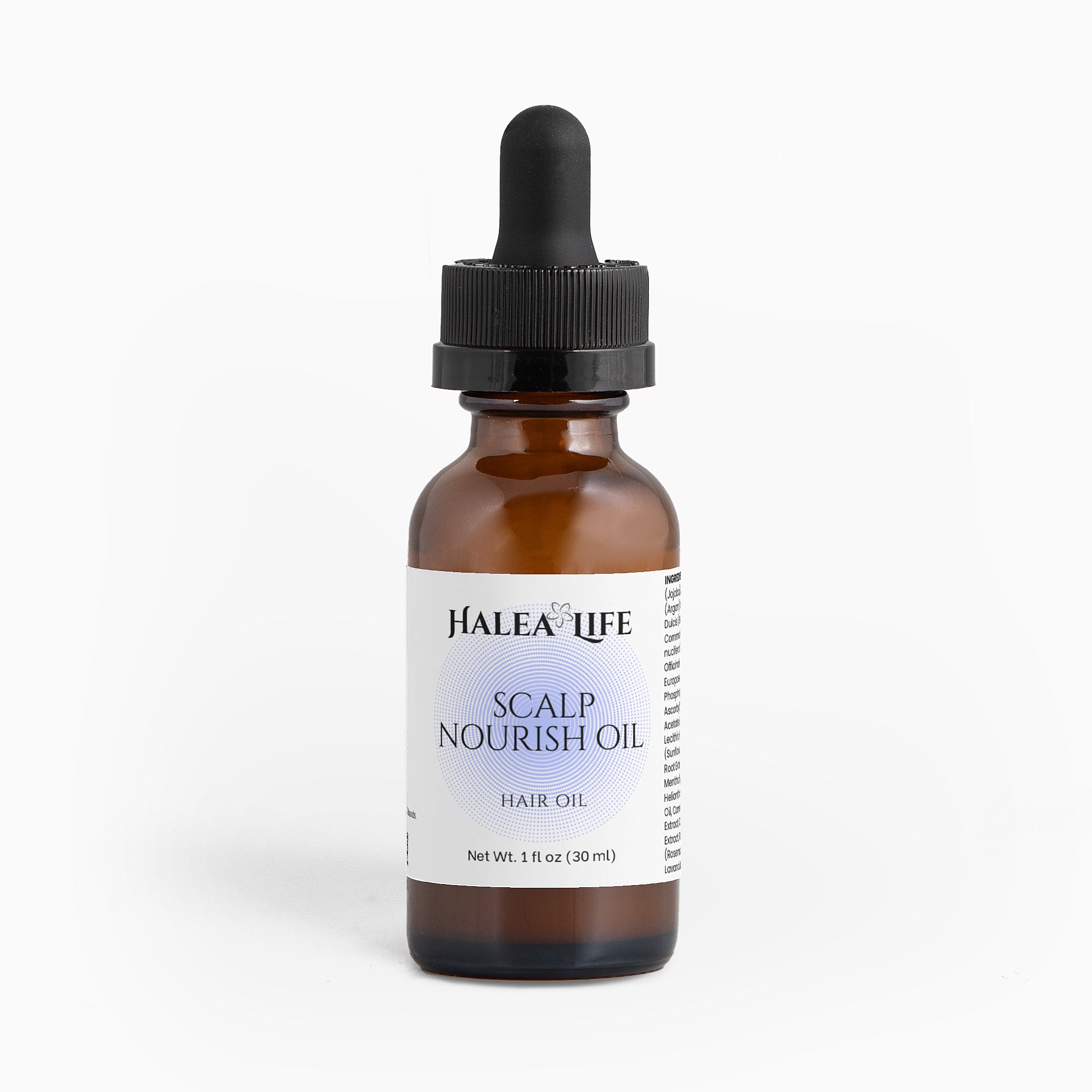


The Halea Life Difference
The Two Things That Actually Drive Hair Health
Hair health is simultaneously a nutritional story and a topical formulation story -- and most approaches address only one of them. The follicle is a metabolically demanding structure that depends on adequate substrate: Biotin (Vitamin B7) at 2,500--5,000 mcg supports the carboxylase enzymes involved in keratin synthesis. True biotin deficiency produces notable hair thinning; supplementation reverses deficiency-related loss. Iron (particularly ferritin -- the stored form, not just serum iron) is the most commonly overlooked cause of diffuse hair loss in women. A ferritin level below 30 ng/mL is sufficient to cause telogen effluvium (excessive shedding from follicle cycling acceleration) even without clinical anemia. Zinc supports keratinocyte proliferation and sebaceous gland function. Vitamin D3 is required for the vitamin D receptor (VDR) signaling that regulates the hair cycle -- D3 deficiency is consistently associated with alopecia areata. Protein sufficiency (1.0--1.6 g/kg/day) provides the keratin amino acid building blocks -- hair is 95% keratin, and chronic low protein intake accelerates shedding. On the topical side, hair care products damage hair and scalp through three primary mechanisms: SLS/SLES sulfate surfactants strip the natural sebum that lubricates and protects the cuticle; silicones (dimethicone, cyclomethicone) coat the shaft creating a smooth appearance while blocking moisture over time; synthetic fragrance sensitizes the scalp with repeated exposure. Halea Life hair care products address both the nutritional and topical dimensions with the same clean formulation standard applied across the entire product range.*
"
Most hair loss isn't genetic. It's nutritional. Biotin gets the attention, but iron and Vitamin D3 are where the most fixable losses hide.
Halea Life -- Made for Every Stage of You
Hair Health Inside and Out
Four Aspects of Hair Health This Collection Addresses
Nutritional Foundation
Biotin, Iron, Zinc & D3 for Follicle Keratin Synthesis
The most common correctable nutritional causes of hair loss: Biotin deficiency (corrected at 2,500--5,000 mcg/day), low ferritin (check serum ferritin, not just hemoglobin -- a ferritin above 70 ng/mL is the target for hair retention), Zinc deficiency (supporting keratinocyte cycling), and Vitamin D3 deficiency (supporting VDR-mediated hair cycle regulation). Addressing these four -- rather than assuming the loss is androgenetic -- should precede any other intervention. A simple blood panel identifies which of these is the active driver.*
Scalp Health
A Healthy Scalp Is the Foundation for Healthy Hair Growth
The follicle derives its blood supply from scalp vasculature -- scalp inflammation, microbiome imbalance, and sebum excess all impair the follicle environment. Sulfate-free cleansers maintain the scalp's natural acid mantle without the stripping that can trigger reactive sebum overproduction. Tea tree oil and salicylic acid at appropriate concentrations support healthy scalp microbiome balance. Scalp massage (3--5 minutes daily) has RCT evidence for increasing dermal papilla cell gene expression associated with hair growth.*
Shaft Integrity
Protein Strengthening, Cuticle Sealing & Porosity Management
Hair shaft integrity is about the cuticle layer -- the overlapping scales that cover the cortex. Heat, chemical processing, UV exposure, and mechanical stress lift and damage these scales, increasing porosity and breakage. Protein-based treatments (hydrolyzed keratin, silk amino acids) temporarily fill the cuticle gaps. Low-porosity hair requires lightweight conditioners (penetrates slowly); high-porosity hair needs heavier conditioning and protein treatments to seal the cuticle. Silicone-free formulas allow the shaft to be genuinely conditioned rather than just coated.*
Clean Formulation
No SLS, No Silicones, No Synthetic Fragrance -- Hair Care That Doesn't Compromise
Standard hair care ingredients that Halea Life avoids: SLS/SLES sulfates (strip natural oils, disrupt scalp acid mantle), silicones (create temporary shine but block moisture and require harsh detergents to remove -- a cycle), synthetic fragrance (leading scalp sensitizer), parabens (preservative allergen concern), and formaldehyde-releasing preservatives. Halea Life hair care uses gentle amphoteric and amino acid-based surfactants, natural conditioning agents (argan oil, aloe, plant proteins), and essential oils at IFRA-compliant concentrations for fragrance.*
Find Your Fit
Who This Collection Is For
1
Those Experiencing Diffuse Hair Shedding
Telogen effluvium (excessive diffuse shedding across the scalp, typically 60--90 days after a triggering event) is often caused by nutritional deficiency, hormonal shifts, illness, or extreme stress. Biotin + Iron (if ferritin is low) + Zinc + D3 addresses the most common nutritional triggers. Getting a ferritin level specifically (not just a standard CBC) is the most important diagnostic step before assuming the loss is permanent or androgenetic.*
2
Those With Color-Treated or Heat-Damaged Hair
Chemical processing and heat damage the cuticle layer through alkaline pH (color, bleach), oxidation, and direct thermal denaturation. Sulfate-free shampoos preserve the color and moisture integrity between washes. Silicone-free conditioning treatments use genuine humectants and protein temporarily fill damage without long-term buildup. Biotin and protein intake address the shaft-quality component that no topical treatment can fully repair.*
3
Clean-Beauty Consumers Wanting Consistent Standards
The same consumer who reads supplement labels and avoids unnecessary additives often tolerates surprising ingredient compromises in conventional shampoo -- because the hair care category has traditionally had lower transparency. Halea Life hair care holds to the same ingredient standard as every other category: no synthetic fragrance, full INCI disclosure, no ingredient categories (silicones, sulfates, parabens) that produce trade-offs the label doesn't acknowledge.*
4
Those Wanting a Simplified, Effective Hair Routine
A simplified hair routine: sulfate-free shampoo 2--3x per week, conditioner or co-wash on alternate days, weekly deep conditioning treatment, and daily nutritional support (Biotin, D3, protein target). Reducing wash frequency reduces SLS exposure and allows natural sebum to condition the scalp. Halea Life's formulas are designed for this simplified routine -- effective at lower frequency without the ingredient overload of a 12-step protocol.*
Common Questions
Frequently Asked Questions
Biotin supplementation reverses hair loss caused by Biotin deficiency -- and Biotin deficiency is more common than recognized, particularly in people who eat raw egg whites regularly (which contain avidin, a Biotin antagonist), those on certain medications (some anticonvulsants, antibiotics, and Accutane deplete Biotin), and those following restrictive diets. For individuals without deficiency, Biotin supplementation does not accelerate hair growth beyond baseline. The first step is ruling out deficiency -- Biotin serum testing is available but not commonly ordered.*
Yes -- this is an important clinical consideration. High-dose Biotin supplementation (2,500 mcg and above) can interfere with immunoassay-based lab tests that use biotin-streptavidin binding, producing false results in thyroid panels (TSH, T3, T4), cardiac troponin assays, and sex hormone panels. Stop Biotin supplementation at least 48--72 hours before any blood work. Inform your physician you supplement Biotin -- they should be aware and may request you stop before testing.*
A standard CBC measures hemoglobin and hematocrit -- the threshold for anemia diagnosis. Ferritin (stored iron) can be depleted below the hair-retention threshold while hemoglobin remains normal, so a normal CBC does not rule out iron-mediated hair loss. Studies on female pattern hair loss consistently show that ferritin below 30--40 ng/mL correlates with telogen effluvium, and that raising ferritin above 70 ng/mL through iron supplementation reverses or slows the shedding. Ask specifically for a serum ferritin level.*
The hair growth cycle has three phases: anagen (growth, 2--7 years), catagen (transition, 2 weeks), and telogen (resting/shedding, 3 months). Nutritional interventions affect the anagen phase -- the phase in which follicles are actively growing. Seeing new growth from correcting a nutritional deficiency typically takes 3--6 months, because telogen hairs shed on their predetermined schedule regardless of whether nutritional status has improved. Reduced shedding is often noticed first (2--3 months); new growth length takes 6--12 months.*
Yes -- sulfate-free shampoos are specifically recommended for color-treated hair because they don't strip the oxidative dye molecules the way SLS-based formulas do, preserving color vibrancy between appointments. Silicone-free conditioners also perform better on color-treated hair for long-term use -- the silicone buildup that accumulates over weeks creates a barrier that interferes with color treatments when you return to the salon. Clean formulas are better for colored hair both for color longevity and for maintaining the scalp health that enables color treatments to process evenly.*
Yes -- hair supplements and hair care products are gender-neutral. Biotin, Zinc, D3, and Iron are as relevant for men experiencing diffuse hair thinning as for women. Male pattern baldness (androgenetic alopecia) has a stronger genetic component and is primarily DHT-mediated -- supplements don't address this mechanism (finasteride and minoxidil are the evidence-based treatments). But nutritional hair loss in men is real and addressable, and the scalp care products work equally well for all hair types and scalps.*